Most brands shopping for an Amazon agency end up with a PPC shop that also writes listings on the side. That's not full-service. It's one piece of the puzzle with a bigger pitch deck.
If your Amazon account has real complexity -- catalog depth, margin pressure, Vendor Central, IP issues -- you need a partner who manages the whole machine, not just the ad console.
Here's how to evaluate whether an agency is actually built for that.
What "full-service" means on Amazon
Full-service means one team owns the outcome across the entire account. Not a PPC team that refers you to a listings freelancer, not a brand manager who outsources creative, not a retainer that doesn't include chargebacks or reimbursements.
The five pillars every serious Amazon account needs someone actively managing:
- Advertising (Sponsored Products, Brands, Display, DSP)
- Listing health and conversion (SEO, A+ Content, creative)
- Brand protection (Buy Box, MAP enforcement, unauthorized sellers)
- Financial recovery (reimbursements, chargebacks, shortages)
- Account operations (Seller Central compliance, Vendor Central, inventory coordination)
A sixth is becoming non-negotiable in 2026: AI search visibility. Buyers are asking ChatGPT and Perplexity for product recommendations before they open Amazon. Your listings are invisible to that entire channel unless someone builds an off-Amazon content layer. More on that below.
The real cost of a PPC-only agency
The math here is straightforward. If you're spending $80K/month in ads and your agency is chasing ROAS while your listings convert at 8% against a category average of 14%, you're overpaying for every click. If unauthorized sellers are running at 20% below MAP, you're losing Buy Box while your agency reports a great TACoS month.
ROAS is a vanity metric when the account has structural problems. A full-service agency fixes the structure first, then scales spend.
We've inherited enough accounts to say this with confidence: most of the profit recovery in year one comes from reimbursements, listing conversion fixes, and unauthorized seller removal -- not ad work alone.
What each pillar actually involves
Amazon advertising
This is where most agencies live. The difference between average and good is whether the agency is working toward contribution margin per unit (revenue minus COGS, fees, and ad spend) or just ROAS.
Good Sponsored Products management means tight match-type discipline, dayparting on high-converting windows, and regular negative keyword audits. Sponsored Brands and Display serve a different purpose -- brand defense and upper-funnel. They shouldn't be run the same way as conversion campaigns.
DSP (Demand-Side Platform) is the next layer. Sponsored Ads only reach people already searching on Amazon. DSP reaches buyers off-platform -- people who visited your listings and didn't convert, in-market audiences across the web, and procurement managers researching competitors. For brands with products above $100 AOV, DSP retargeting typically delivers 2.5-4x ROAS on re-engaged traffic.
Listing SEO and creative
If your title, bullets, and backend terms haven't been audited in 12 months, they're probably not working hard enough. Amazon's A10 algorithm has shifted weight toward click-through rate, conversion rate, and session velocity -- not just keyword density.
Good listing work is research-first. You map actual search queries against your catalog, prioritize by conversion probability, and rewrite to match buyer intent. A+ Content and product video do the conversion work once traffic arrives.
Ask any agency you're evaluating to show you before/after keyword ranking data, not just screenshots of "improved" content.
Brand protection
Unauthorized sellers are a revenue problem before they're a brand problem. When a third party wins your Buy Box at 18% below MAP, you lose the sale, your ad spend drove that traffic, and the buyer's experience is out of your control.
Active brand protection means daily monitoring, fast C&D escalation, IP complaint filing, and ongoing enforcement -- not a one-time cleanup. The sellers come back.
Reimbursement recovery
Amazon loses, damages, and miscounts inventory constantly across FBA and Vendor Central. FBA reimbursements are filed through Seller Central. 1P shortage claims and chargeback disputes require different processes entirely.
Most brands leave this completely unmanaged. Historical audits across 18 months typically recover meaningful five-figure sums for mid-size accounts. It should be on performance pricing -- you pay a percentage of what's recovered, nothing if they find nothing.
Vendor Central operations
If you're on a 1P arrangement with Amazon, you're in a completely different environment from Seller Central. PO management, ASN compliance, chargeback dispute processes, AVS negotiations -- these require specific expertise that most agencies don't have.
The agencies that handle 1P usually also manage hybrid accounts (selling as both 1P and 3P). The operational complexity doubles, but so does the room to negotiate.
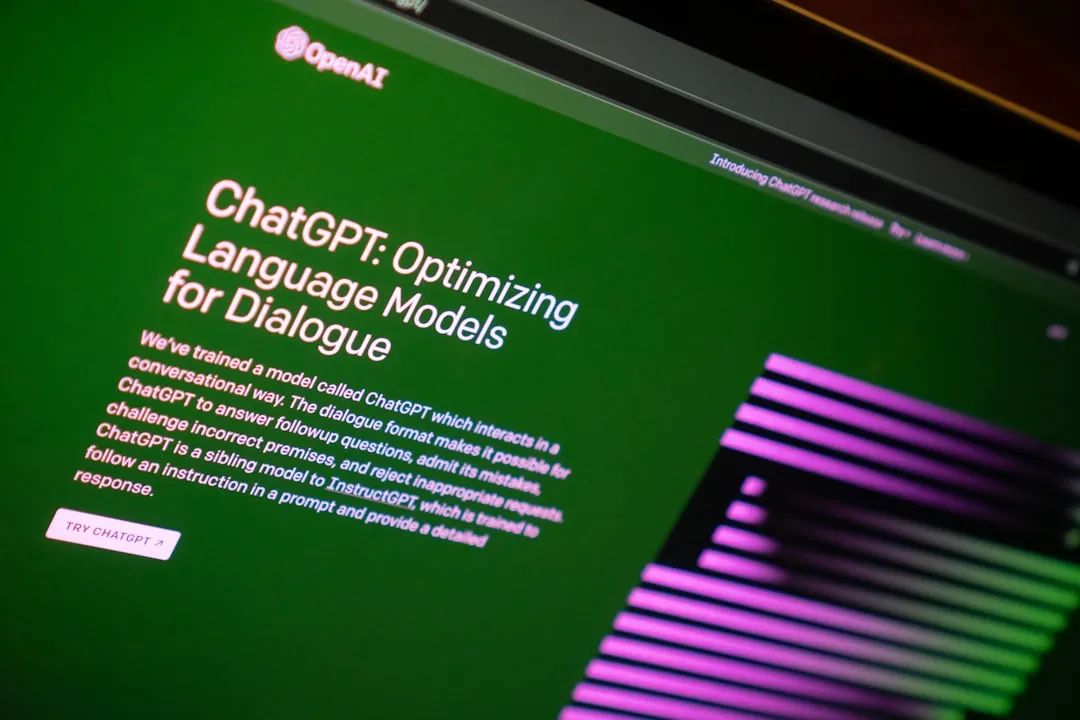
AI search visibility in 2026
Amazon blocked AI crawlers in late 2023. As a result, your product listings are invisible to ChatGPT, Perplexity, and Google AI Overviews -- even if you're a category leader on Amazon.
Buyers who ask AI for product recommendations before opening Amazon are going somewhere. If a competitor has off-Amazon content that AI tools can crawl and cite, their brand gets the recommendation. That buyer then searches the brand name on Amazon, driving higher conversion, lower ACoS, and organic rank lift across the catalog.
Building AI visibility for Amazon is not the same as building a DTC site. The goal is creating crawlable content -- product pages, use-case guides, review site presence, structured schema -- that leads back to Amazon. It's a discovery layer for the Amazon flywheel, not a bypass of it.
This is early enough that most agencies haven't built the capability yet. If an agency can't explain AI visibility as an Amazon growth strategy -- not just "be on social media" -- that's a gap worth noting.
What to ask before you hire
What does your reporting include? Monthly PDF reports are a red flag. You should expect weekly calls, real-time dashboard access, and reporting that ties ad spend to contribution margin -- not just impressions and clicks.
How many active clients do your account managers carry? The industry average runs 40-60 brands per account manager. At that ratio, your account gets a few hours of attention per month. Ask exactly what the ratio is and who handles your account day to day.
Do you manage Vendor Central? Many agencies only know Seller Central. If you're 1P or hybrid, this is a non-negotiable capability to confirm upfront.
What's your reimbursement recovery process? If the answer is vague, they probably don't have one.
What do you do about unauthorized sellers? If the answer is "that's handled by your brand registry account," it isn't being actively managed.
How do you think about AI search visibility? Not a trick question -- it's useful for understanding how forward-looking the team is.
What does full-service Amazon management cost?
For a $1M-$10M Amazon business with a managed catalog, full-service agency retainers typically run $2,500-$7,500/month depending on account complexity, catalog size, and which services are included.
Below $2,500/month, you're likely getting PPC management only. Above $7,500/month, you're usually looking at larger catalogs, Vendor Central complexity, DSP, or some combination.
Reimbursement recovery is typically priced separately on performance (15-25% of recovered amounts is the market range). DSP has its own media budget requirement on top of retainer.
The agencies worth working with will scope your account before quoting. If you get a price before anyone looks at your account, that's a template -- not a scope.
Red flags that signal a PPC shop in disguise
- The proposal is 80% ad metrics with a paragraph at the end about "listing support"
- No mention of reimbursements, chargebacks, or unauthorized seller management
- Reporting is monthly and delivered as a PDF
- Account managers carry 40+ brands
- No clear answer on Vendor Central capability
- Guarantees on specific ACoS numbers before they've audited your account
These aren't disqualifiers individually, but three or more together usually indicates an agency that does PPC well and wraps other language around it for the pitch.
What to do this week
- List every service area on your Amazon account that someone is actively managing versus not managed at all
- Pull your reimbursement history for the past 6 months -- if nothing has been filed, start there
- Search your top 5 ASINs in a ChatGPT or Perplexity session and check if competitors show up where you don't
- Ask your current or shortlisted agencies exactly how many brands each account manager carries
- Request to see your account's contribution margin report -- if they can't produce one, that's your answer
- If you're on Vendor Central, ask who handles chargeback disputes and what the current dispute rate is
If you're evaluating full-service Amazon partners, ALFI works with $1M-$50M brands across Seller Central, Vendor Central, and hybrid accounts. We cap at 18 brands so every account gets senior attention. Book a free 30-minute audit and we'll show you where the account is leaking profit before you decide anything.
What's included in full-service Amazon management?
At minimum: PPC management, listing SEO and creative, brand protection, and account compliance. A real full-service engagement also covers reimbursement recovery, Vendor Central operations (if applicable), DSP, and AI search visibility. The scope varies by account -- what matters is that one team owns the outcome across all of it.
How much does a full-service Amazon agency cost?
For most $1M-$10M accounts, expect $2,500-$7,500/month depending on complexity and scope. Reimbursement recovery is usually performance-priced separately. DSP requires its own media budget. Agencies quoting flat rates before they've audited your account are quoting templates, not scopes.
What's the difference between a PPC agency and a full-service Amazon agency?
A PPC agency manages ad campaigns. A full-service agency manages the entire account -- advertising, listing health, brand protection, reimbursements, financial operations, and AI search visibility. The distinction matters because ad performance is capped by the health of everything else in the account.
How do I know if my current agency is actually full-service?
Ask for a contribution margin report (revenue minus COGS, fees, and ad spend) for the past 90 days. Ask what reimbursements were recovered last quarter. Ask who handles unauthorized seller enforcement and what the current Buy Box ownership rate is. Vague answers tell you what you need to know.
What is AI search visibility and why does it matter for Amazon sellers?
Amazon blocked AI crawlers, so your listings can't be cited by ChatGPT or Perplexity. Buyers who ask AI for product recommendations end up at brands that have off-Amazon content. Building that content layer -- crawlable product pages, use-case guides, review site presence, structured data -- drives branded search back to Amazon, which improves conversion, lowers ACoS, and lifts organic rank. It's an Amazon strategy built off-Amazon.